
the 6 key nutrients for starting solids
Introducing solids is a thrilling milestone for both babies and parents and while food IS fun, there are some essential nutrients to be wholeheartedly embraced during it to really support your littles brain, gut and immune development.
Now, let's keep in mind that the main source of nutrition during this first year will still be from breastmilk or formula (WHO recommends breastmilk or formula be continued until a minimum of two years old to really maximise those important nutrients and immune factors) but the foods offered in between feeds can pack an extra nutrition punch (and support their gut development!).
So what the heck are those ‘six essential nutrients’ your baby needs?
1) IRON
the underdog nutrient that is becoming quite the superstar across socials.
We all know and love iron for its energy support but did you know that it’s crucial for your little ones growing brain, nervous system and even sleep?!
If your iron took a dive towards the end of your pregnancy, that is because your clever cookie baby was storing your iron up for themselves (thanks kiddo) for the next six months as very little iron is passed through breastmilk (and the iron in most formulas isn’t all that bioavailable/loved by the bod).
Around 6 months old, those iron reserves are running on empty and need refueling - pronto. So when starting solids, around the recommended 6 month mark (or when the signs of readiness are being met), dietary iron is our #numerouno nutrient to keep in mind.
You’ll find heme- iron (the most preferred form the body uses) in animal based foods like lamb, beef or chicken and particularly in their organ meats like liver or kidney.
We love iron as close to the way nature made it so do be mindful of packaged foods with ‘iron fortified’ claims - this is often with poor synthetic iron forms that are poorly tolerated by the gut and can lead to a backed up bub.
Top tip: Pair an iron rich ingredient / meal with some vitamin c foods (capsicum, strawberries, kiwi, pumpkin etc) to support iron absorption
2) DHA
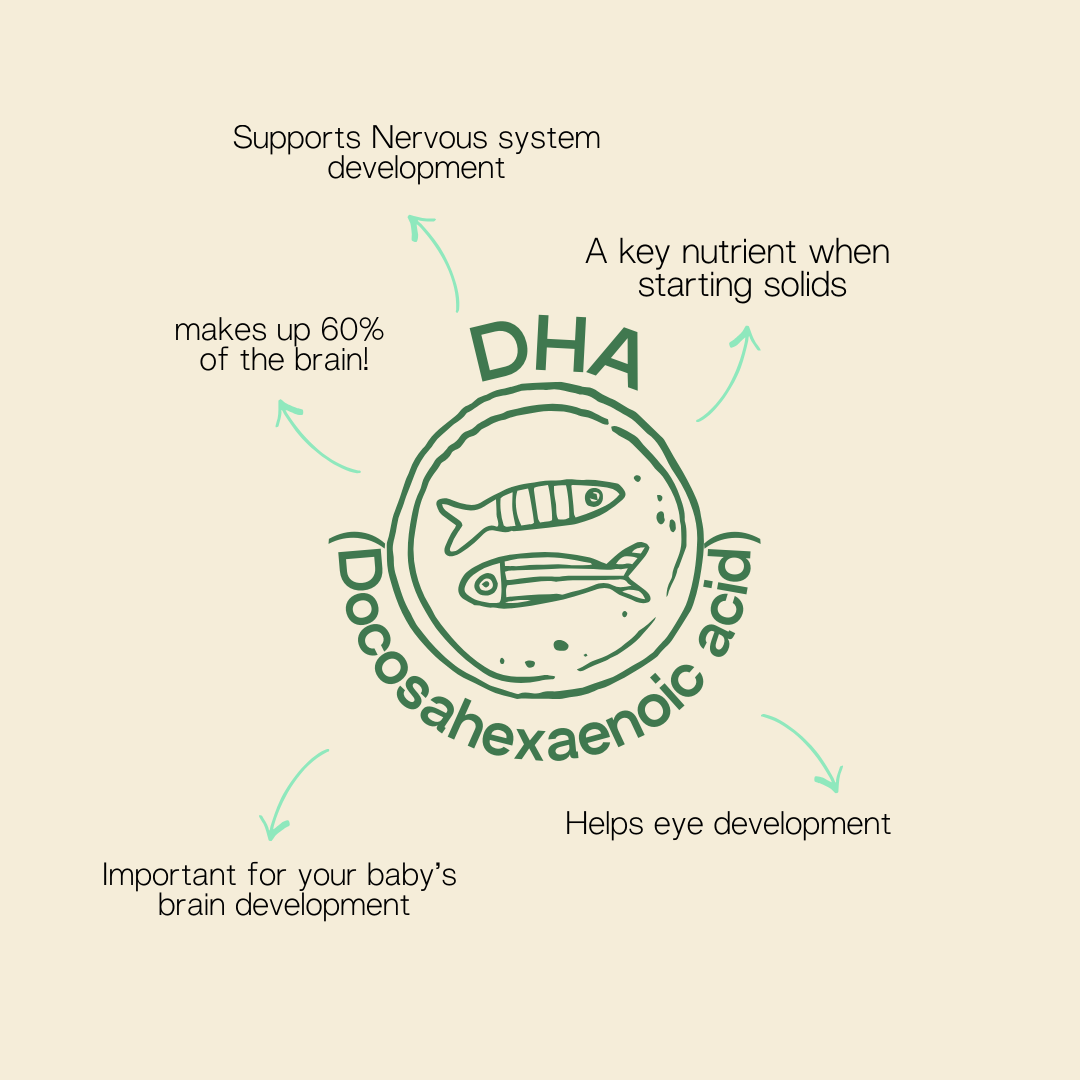
your baby's brain doubles in size in their first year of life! It’s made up of nearly 60% fat that comes from DHA so this nutrient absolutely makes our top 6! Necessary for brain and eye development, helping absorb fat soluble vitamins (like A,D,E and K) and building nervous system tissue.
DHA can be found in fatty fish like salmon, sardines and trout or cod liver oil.
Other health fats we love (that also support blood sugar balance and keeping your baby feeling nice and full) are grass fed butter, ghee, eggs, avocados, coconut yoghurt and nut butters. Keep in mind, these aren’t DHA rich foods but rather necessary for that brain development.
3) Calcium
there is some highly impressive skeletal growth taking place in the first year of your baby's life and calcium supports not just this but also their teeth, heart, muscle and even nerve function!
Our favourite food sources of calcium are sardines, mackerel, salmon, tahini, dark greens like spinach or silverbeet and of course, dary sources like goats milk, plain greek yoghurt and kefir.
4) Probiotics
a good gut is a cultured gut.
Probiotic rich foods help support your baby’s gut microbiome, which in turn support digestion, their immune system and even help broaden their palate by introducing a ‘sour’ flavour profile to their otherwise sweet or salty exposures.
We love to encourage an emphasis to be placed on offering probiotic rich foods especially for bubs who are/were formula fed, been exposed to antibiotics (via pregnancy, birth or post birth) or born via a c-section. Do start them on these foods slowly though or you might find their gut has a tricky time adjusting!
Food sources we love are sauerkraut brine (and working their way up to pulsed sauerkraut ) stirred through purees or on a spoon, kefir, plain greek yoghurt and beet kvass.
5) Choline
She’s not talked about enough but choline is quite the nutrient to pump to support brain development, cognitive function, memory, learning and even as nitty gritty as playing a role in building supportive cell membranes.
Our top food sources are eggs, liver, brussel sprouts and wild caught salmon.
6) Vitamin D3
strong bones, teeth and immune system? Yep, she can support them all! Vitamin D3 is one of the nutrients that most breastfed babies can be supplemented with (depending on the levels of the mama) anddd one to be honing in on when offering foods. While formula is supplemented with vitamin D, it’s not in the preferable form so our top food recommendations for all babies are: Fatty fish like salmon, snapper, mackerel, sardines and trout, cod liver oil and egg yolks.
For practical, step-by-step support when starting solids, Tiny Tummies Academy guides you through baby nutrition with clear, visual lessons you can follow at home.
